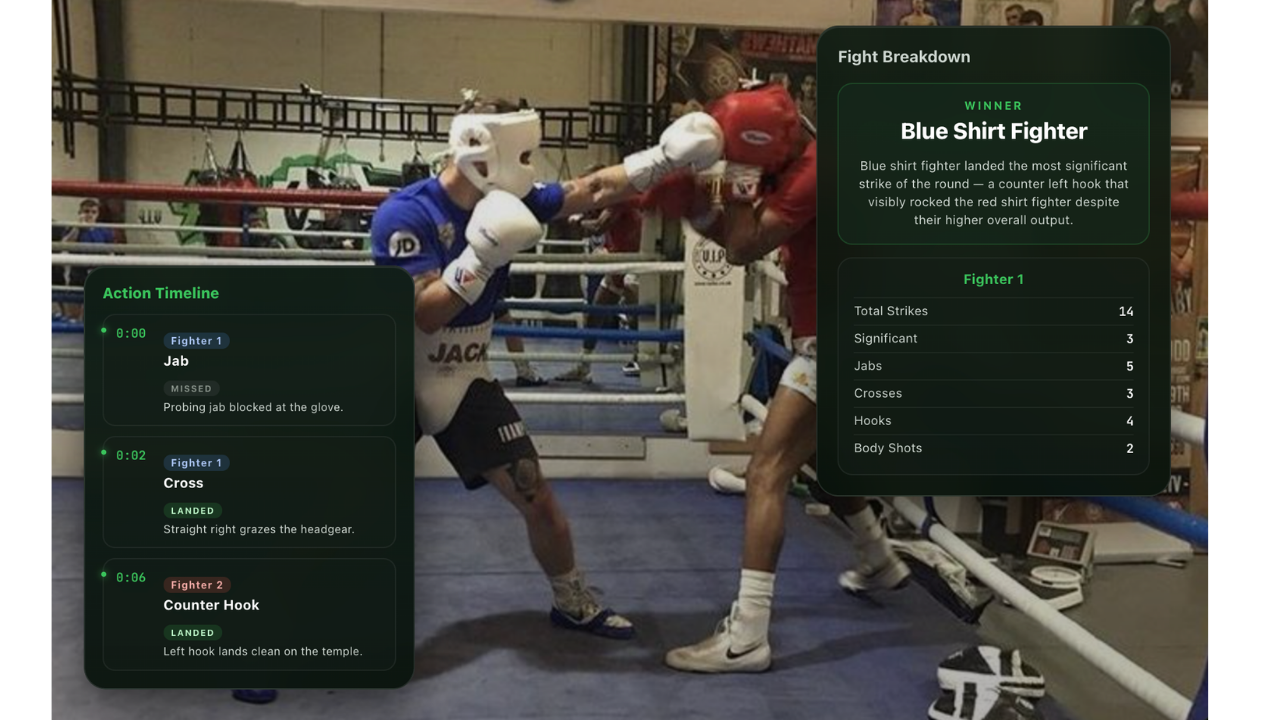
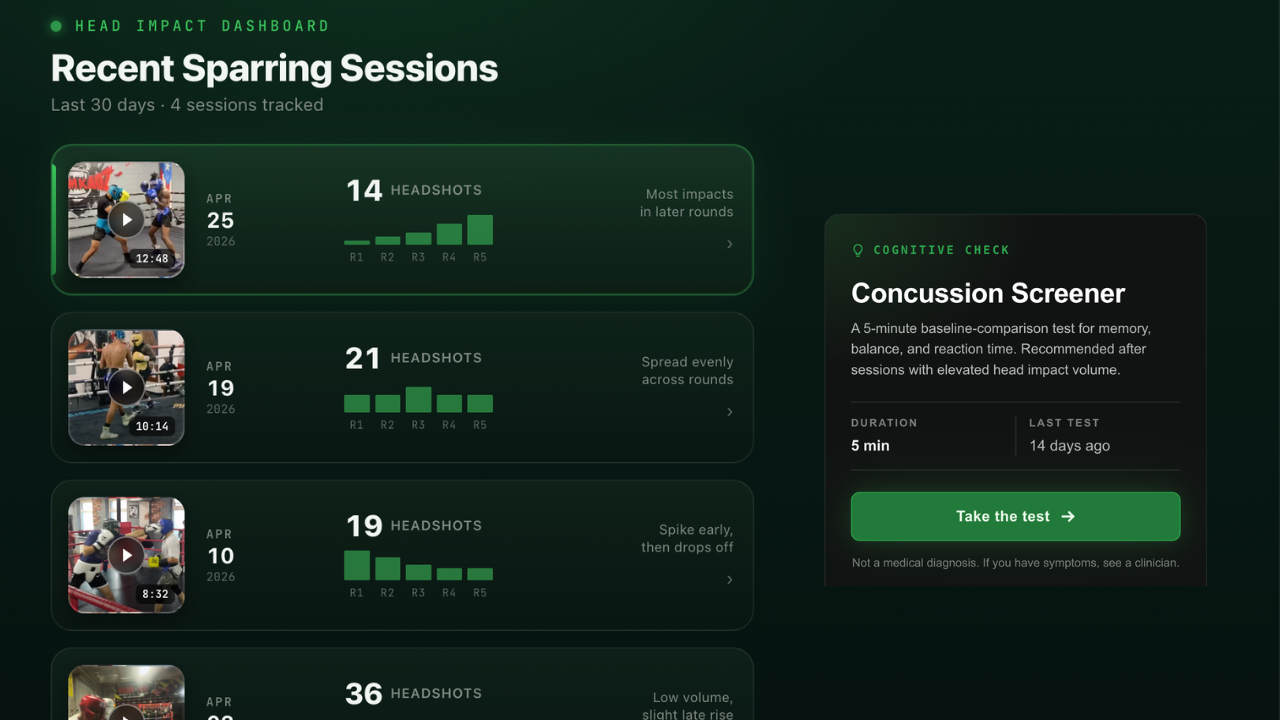
Advanced Combat Analysis System
Drop sparring footage here
or click to select file
Evidence-based education from the 2022 Amsterdam Consensus
A concussion is more than just getting your "bell rung." It is a brain injury caused by a physical blow that creates a metabolic crisis inside your skull [1]. Each year, roughly 70 million people worldwide suffer from this injury [3].
Here is what every boxer needs to know about the latest medical consensus from the 2022 Amsterdam Conference [5].
You don't need to be knocked out to have a concussion. In fact, fewer than 10% of concussions involve a loss of consciousness [2].
Image: Concussion Alliance
After a hard hit, your brain enters a state of emergency:
Image: Concussion Alliance
One of the most dangerous myths in boxing is that a clean CT or MRI scan means you are fine.
The medical community uses the "11 R's" to manage recovery. For a fighter, these are the most critical:
Image: Complete Concussions
A concussion isn't just a "ding" in your brain. It is a full-body system disruption. When you take a hard shot, the damage triggers a chain reaction that affects your nervous system, your stomach, your sleep, and your hormones.
Understanding this "whole-body" crash is the only way to recover properly and get back in the ring safely.
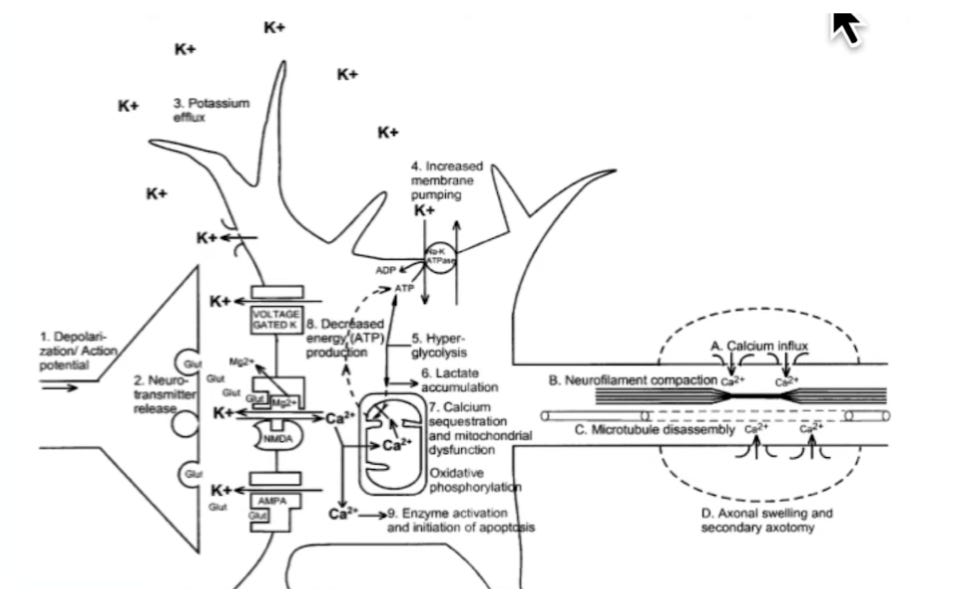
When your head snaps back or rotates, your brain cells stretch and leak. They dump out important chemicals and suck in things they don't need (like calcium). [9]
This creates an "energy crisis." Your brain works overtime to fix the leaks, burning through all its fuel. Once that fuel is gone, your brain enters a "low-power mode" that can last for weeks. This is why you feel "foggy" and slow. [11]
Image: Concussion Alliance
Your nervous system has a "gas pedal" (stress) and a "brake" (rest). A concussion gets the gas pedal stuck to the floor. This is called a "sympathetic storm." [2]
Image: Concussion Alliance
Within hours of a hit, the stress on your brain actually opens up the lining of your stomach. This is often called "leaky gut." [5]
Bad bacteria and toxins leak from your gut into your bloodstream.
Once these toxins enter the bloodstream, they trigger a systemic immune response. This can breach the blood-brain barrier, which may already be compromised from the initial impact. This leads to:
Junk food—specifically highly processed sugars and seed oils—is pro-inflammatory.
Image: Complete Concussions
Recovery usually fails because fighters only treat their heads. You have to treat the "Triad":
Image: Cognitive FX USA
A concussion damages the "master clock" in your brain that controls sleep. [6]
Image: SAGE Journals
The pituitary gland (the "master gland") sits in a fragile spot in your skull. When your brain moves, the stalks of this gland can stretch or tear. [32]
About 25% of fighters end up with "hidden" hormone issues months after a hit. This can lead to:
Image: Cognitive FX USA
The "amygdala" is the part of your brain that handles fear and anger. Usually, your "front brain" keeps it under control. A concussion disrupts the wires between them. [39]
This is why concussed fighters often feel "snappy," irritable, or suddenly anxious. It's not a personality flaw; it's a disruption in your brain's wiring. [37]
In the following lessons we will address each cause and its related symptoms with appropriate treatment to get back to your healthy and resilient self ASAP!
But remember: patience is key.
Rushing back into intense training and sparring too soon after a concussion can do WAY more harm than good.
The old advice for a concussion was "stay in a dark room until you feel better." Research now shows that too much rest actually slows you down.
Modern recovery is active, not passive.
A concussion isn't a bruise or a bleed that shows up on an MRI. It is a functional "power failure." When you take a hard shot, your brain cells leak potassium and soak up calcium. This creates a massive demand for energy (ATP) to fix the balance [13].
At the same time, blood flow to the brain drops. Your brain is essentially "running lean"—it needs more fuel but has less coming in [17]. This is why you feel "foggy." Even after your symptoms vanish, your brain's energy levels may still be low for weeks.
The biggest risk is Second Impact Syndrome (SIS). If you take another hit while your brain is still in that energy crisis, your brain can lose the ability to regulate its own blood flow. This causes rapid swelling and can be fatal or lead to permanent damage [15, 21]. "No symptoms" does not mean you are healed.
Image: Complete Concussions
You should rest for the first 24–48 hours only [2]. After that, total rest makes things worse by causing anxiety and deconditioning [1].
Active Recovery: Within 2–10 days, you should start light exercise that doesn't make your symptoms worse [6]. This helps "re-train" your nervous system and gets blood flowing back to the brain and throughout the body like it did pre-injury [26].
If you believe every small headache is a sign of permanent brain damage, your recovery will take longer. This is called the "Nocebo Effect" [30].
Avoid "Fear-Avoidance": If you stop moving entirely because you're scared of symptoms, your body gets "unfit," making you even more sensitive to light and movement [31, 26]. Trust the gradual process and remember you're not back at square one just because you feel symptoms.
Image: Cognitive FX USA
It is ok to feel some symptoms within reason. But listen to your body and follow the Rule of Three!
Specific nutrients can help bridge the energy gap [42]:
Healthy nutrition (diet, hydration, supplements) is key for concussion recovery. We get into more detail on how to go about this effectively in an upcoming lesson.
Being sidelined isn't fun.
You watch your teammates sweat while you rest. You feel like you're losing your edge. Maybe every day out of the gym feels like a step backward.
It sucks, but taking this time to slow down and focus on your health is very important.
Your recovery and long-term wellbeing depends on it.
A concussion is more than a headache. It is a chemical storm in your brain. This storm affects your mood, not just your balance.
You might feel irritated for no reason. You might feel anxious or numb. Understand that this is the injury talking.
Do not judge your emotions. Observe them. Your brain is trying to recalibrate.
Fighters are trained to "suck it up." That mindset works in the tenth round. It fails in concussion recovery.
Self-compassion isn't "soft."
It's strategic.
If you trash-talk yourself for being "lazy," you create an unnecessarily negative dialogue, and you spike your cortisol. High stress slows brain healing. You are literally keeping yourself injured longer by being a jerk to yourself.
Be your own teammate, not your own critic.
Recovery requires a different kind of discipline. When you want to get back to training ASAP a week out from your concussion, or your friends are calling you out to drink and party, take a deep breath and zoom out. See that this process is worth trusting, and following it diligently will get you to where you really want to go faster than taking shortcuts.
Patience is the price of a long career. If you rush back and take hits to the head while your brain is already in a vulnerable state, this can cause serious long term issues.
You trade 4 weeks of training for a lifetime of unnecessary suffering.
Treat your recovery like a fight camp. Follow the protocols. Track your symptoms. Respect the process.
If you do it right now, you'll be back in no-time, and you won't get stuck with persistent symptoms like those who rush back to hard training and partying.
Protect your brain, you only get one.
A concussion isn't a bruise on your brain; it is an electrical and chemical short circuit.
While the hit happens to your head, the damage spreads to your entire body through your Autonomic Nervous System (ANS)—the "auto-pilot" that controls your heart, breathing, and energy levels [1].
When this system breaks, you get "post-concussion syndrome": brain fog, fatigue, and feeling like you can't get your heart rate up without getting a headache [3].
Your nervous system has two modes:
Image: Concussion Alliance
After a concussion, your "brake pedal" fails. You stay stuck in "Fight or Flight" mode [1]. This is why your Heart Rate Variability (HRV) drops. A low HRV means your nervous system is stressed and can't recover [6]. Research shows this imbalance lasts much longer than your actual symptoms [12].
Your brain usually keeps its own blood pressure steady. A concussion breaks this thermostat. Your brain can't buffer blood pressure changes anymore, which is why your head throbs when you stand up or train [2, 8]. This "plumbing" issue can last for over a month, even if you feel "fine" [6, 8].
Image: Cognitive FX USA
The Vagus Nerve is the main "cable" for your rest-and-digest system [10]. It acts like a natural fire extinguisher for brain inflammation [20]. You can manually activate it to speed up recovery:
The old advice of "sit in a dark room" is obsolete. Total rest can actually make you more depressed and sluggish [13].
The new rule: Sub-threshold exercise. Walk or light cycle at a pace where you can still hold a conversation. If your symptoms spike, back off. Light movement increases brain blood flow and helps reset your "auto-pilot" [3, 16].
We get deeper into how to exercise effectively for concussion recovery in the next lesson.
We can pick up unnecessary amounts of stress and anxiety from excessive sympathetic nervous system activity. This can be caused by Autonomic Dysfunction (Dysautonomia) which can stem from a concussion, sparring, or a hectic high-stress lifestyle.
Your body has two modes: "fight or flight" and "rest and digest" because there are 2 competing nervous systems in your body:
You typically find yourself in either rest and digest mode (e.g. when you feel a bit tired after a big meal) or fight or flight mode (e.g. when you feel active and alert while exercising or sparring).
Excess sympathetic activity suppresses the parasympathetic activity. The parasympathetic nervous system is responsible for winding you down for the rest, repair, and anti-inflammatory processes.
The sympathetic nervous system (SNS) directs the body's resources (like blood flow) away from what's not essential for being active and alert.
So when you're in fight or flight mode, your body isn't digesting as well because it's not an essential function in that state. (From an evolutionary perspective, your ancestors were in fight or flight mode when hunting, and in rest and digest mode after a feast.)
So when you have excessive stress and anxiety from excessive SNS activity, you might get digestive issues as well.
The main nerve of the parasympathetic nervous system (PNS) is called the vagus nerve. It connects your brain to your internal organs. The vagus nerve makes up about 75% of the parasympathetic system's fibers.
The function of your vagus nerve is described as "vagal tone":
Higher vagal tone can:
1. Deep, Slow Breathing and Meditation
5 minutes of silent meditation with deep breathing. Focus on expanding and breathing deep into your belly and keeping your upper chest very still. Ideally, should be a slow inhale (3 sec), hold (1 sec), slow exhale (3 sec). OR deep inhale for 3 seconds, slow exhale for 15 seconds. Incorporate this throughout the day (e.g. after waking up, before a meeting, to wind down for bed).
2. Cold Water Exposure
Cold exposure can help decrease sympathetic and increase parasympathetic activity. You can work your way up:
3. Long Steady Walks
Long steady walks calm the nervous system. Getting into nature helps as well. You can also practice mindful walking where you pay close attention to every step (e.g. how you place and lift your foot on each step).
4. Earthing / Grounding
Walking on grass, sand, or dirt with bare feet daily for 10 minutes.
5. Gargling
Powerful vagus stimulator. Gargle water or salt water for 5 minutes in the morning and/or before bed. Needs to be a deeper gargle for optimal stimulation.
6. Using Your Voice
Laugh daily because it stimulates the diaphragm and the vagus nerve. Same for singing and chanting (like when the yogis say "ooooommm…").
Magnesium
L-theanine
Disclaimer: The information provided in this guide is for educational purposes only and is not intended as a substitute for professional medical advice, diagnosis, or treatment. Please consult with a healthcare professional before starting any new supplement regimen or practice, especially if you have any underlying health conditions.
Sitting in a dark room is no longer the best way to fix a concussion. Doctors used to call this "cocoon therapy," but we now know that total rest can actually slow your recovery. Modern research shows that light exercise is the fastest way to get your brain back in the fight.
A concussion is a functional injury, not a structural one. It's a glitch in how your brain uses energy. When you take a hard hit, your brain cells leak chemicals and demand a massive amount of fuel to reset. [8]
At the same time, blood flow to the brain often drops. This creates an energy crisis. Your brain wants more fuel than your body can deliver. This mismatch is why you feel "foggy" or get a pounding headache when you try to do too much. [10]
Aerobic exercise—like walking or light cycling—acts like "brain fertilizer." It triggers the release of a protein called BDNF. [16] BDNF helps your brain repair damaged connections and grow new ones. [17]
BDNF (Brain-Derived Neurotrophic Factor) and exercise-induced brain recovery
A 2025 study from Western University found that just one 20-minute session of light exercise can jumpstart this process. Athletes in the study had faster reaction times and fewer symptoms just 24 hours after their first light workout. [20]
You shouldn't just jump back into sparring. You need to find your "symptom threshold." This is the heart rate where your symptoms start to get worse. [21]
Use this rule to manage your daily activity and exercise. [32]
The 3-Point Rule for managing concussion symptoms
Note: If your symptoms jump by 3 points or stay elevated for hours, you did too much. Scale back the intensity tomorrow. [32]
To add another layer of analysis you can measure your heart rate, notice what heart rate your symptoms flare up at, and work around that:
Tracking heart rate and symptom thresholds during recovery
The 6-step protocol from the Amsterdam Consensus ensures you return safely. [4, 6]
| Step | Activity | Goal |
|---|---|---|
| 1 | Daily Life | Basic chores and walking. |
| 2 | Light Cardio | Walking or stationary bike (No lifting). |
| 3 | Light Drills | Running, shadowboxing (No contact). |
| 4 | Heavier Drills | Heavy bag, pad work, complex movement, and light strength training (No contact). Note: This should be at least 14 days out from injury. Start light. |
| 5 | Full Practice | Technical sparring (Requires doctor's clearance). This should be at least 30 days out from the injury. |
| 6 | The Fight | Unrestricted return to sparring and competition. |
"Nuisance" symptoms like mild headaches or light sensitivity are normal during recovery. However, Red Flags mean you need an ER immediately [34]:
From: Sport Concussion Assessment Tool 6 (SCAT6), British Journal of Sports Medicine 2023;57:622-631.
Red flag symptoms requiring immediate medical attention
The bottom line: Don't fear movement. Use a heart rate monitor, follow the 3-point rule, and feed your brain the oxygen it needs to heal.
When you get "rocked" or take a hard shot to the head, it's not just a brain issue. It's a whole-body crisis. Research shows that a concussion triggers a massive "energy gap" in your brain and actually messes with your stomach (your gut). If you want to get back in the ring safely, you need to treat your recovery like a training camp.
Your brain and your gut are constantly talking. Within hours of a hit, your gut wall can become "leaky." This allows toxins to enter your bloodstream, which travels back to your brain and makes inflammation (swelling) worse [1, 5].
The Fix: You need to keep your "good bacteria" strong to protect your brain. A messed-up gut leads to more unhelpful inflammation, neuroinflammation, and brain fog [2, 8].
The gut-brain connection and its role in concussion recovery
After a concussion, your brain's demand for energy spikes. It usually uses 20% of your body's energy, but after a hit, that can jump to 40% [16, 17].
Food First: Don't just pop pills. Real food has the "team" of nutrients your brain needs for an effective recovery [13].
After a concussion, proper nutrition is especially important to:
The significant dietary shifts over the past centuries, especially in the last 50 years, have distanced us from the nutritional practices of our ancestors. This mismatch between our modern diet and our body's natural needs has led to widespread health issues.
Proper nutrition is the cornerstone of optimal brain health, rapid recovery, and peak athletic performance—especially vital in the demanding world of combat sports.
Your diet plays a pivotal role in managing inflammation, a key factor in many chronic health issues. Modern Western diets, laden with processed foods, have been shown to significantly increase inflammation, hindering both recovery and overall health.
This guide will teach you how to optimize your diet for peak performance, brain health, and overall health.
Think of these as the raw materials for repairing your gut and brain:
Healthy Fats: Your brain is 60% fat. Use Salmon, Sardines, Avocados, and Walnuts to repair brain cell membranes [23, 26].
Healthy fats essential for brain cell membrane repair
Protein: You need 1.0 to 1.5g of protein per kg of body weight to fix damaged tissue. Eat eggs, fish, chicken, and beef. Ideally it is well-sourced and organic. [11, 15].
Antioxidants: A concussion causes an "oxidative storm" (cellular stress). Blueberries, dark chocolate, and leafy greens help neutralize this damage. Eat the rainbow! Different colored fruits and vegetables come with different antioxidant properties. [23].
Colorful fruits and vegetables provide essential antioxidants
Your brain is 75% water. If you are even dehydrated, this doesn't help recovery [18].
Once your diet is dialed in, use these to further support your body and brain:
Omega-3 Fish Oil (High in DHA):
Magnesium:
Melatonin:
Curcumin:
Creatine:
Creatine can help with both prevention and recovery!
N-Acetyl Cysteine (NAC):
Alcohol: Total poison for a concussed brain. It kills REM sleep, which is the only time your brain truly repairs itself [55].
Caffeine: Avoid for at least the first 72 hours. It causes dehydration and keeps your brain "on" when it needs to be resting [21, 56].
Ultraprocessed Foods (western high fat diet): Can exacerbate TBI-induced energy crisis and metabolic dysfunction leading to an exacerbated neuroinflammation.
How ultraprocessed foods exacerbate TBI-induced dysfunction
Processed Sugar: Causes energy crashes that make headaches and brain fog worse [11].
Foods to avoid during concussion recovery
The significant dietary shifts over the past centuries, especially in the last 50 years, have distanced us from the nutritional practices of our ancestors. This mismatch between our modern diet and our body's natural needs has led to widespread health issues.
Proper nutrition is the cornerstone of optimal brain health, rapid recovery, and peak athletic performance—especially vital in the demanding world of combat sports.
Your diet plays a pivotal role in managing inflammation, a key factor in many chronic health issues. Modern Western diets, laden with processed foods, have been shown to significantly increase inflammation, hindering both recovery and overall health.
It's well-documented that a diet high in processed foods, both before and after a traumatic brain injury, can significantly hinder recovery.
This guide will teach you how to optimize your diet for peak performance, brain health, and overall health.
Our goal with this diet is to focus on foods that support brain function and healing while eliminating those that cause inflammation and other harmful effects. Adopting this approach can also contribute to better overall well-being as input = output.
After a concussion, proper nutrition is especially important to:
Hydration:
Balanced Meals:
More Fruits and Vegetables – Full of Antioxidants:
More Healthy Fats:
Both caloric restriction and fasting have been shown to improve brain health and enhance cognitive function.
There are different ways one can practice fasting or caloric restriction:
(Typically when you fast, you don't consume anything other than water)
Fasting isn't one-size-fits-all; find a method that fits your lifestyle and listen to your body's signals.
Disclaimer: This guide is intended for educational purposes only and should not be considered a substitute for professional medical advice, diagnosis, or treatment. Always consult with your healthcare provider before making any changes to your diet, beginning a new exercise program, or starting any supplementation regimen.
Important: Get your levels tested so that you can take the appropriate dosage. You don't want to be taking too much or too little.
Also consider the medium. Sometimes sprays or liquids are better than capsules/gummies/tablets because they have better bioavailability, meaning your body will better-absorb the supplement.
Disclaimer: This guide is intended for educational purposes only and does not substitute for professional medical advice. Always consult with your healthcare provider before making any decisions regarding your health. Do not use the information provided here to diagnose or treat any medical condition, nor to prescribe medications or other treatments. Prior to starting any new treatment or exercise regimen, including the use of nutritional, herbal, or homeopathic supplements, you should seek guidance from a qualified healthcare practitioner.
After a hard sparring session or a fight where you've taken a "bell-ringer," your brain enters an energy gap. Think of it like a phone with a damaged battery—it's trying to run background updates while it's at 2%, and it can't keep up.
Medical research shows that sleep is the primary engine for fixing this. Between 30% and 70% of people with head injuries struggle with sleep, and if you don't fix it, your recovery will stall [1].
While you sleep, your brain literally "washes" itself. It opens up drainage channels to clear out toxic waste and proteins that build up after a hit. If you don't sleep, these toxins stay in your head, leading to brain fog and long-term damage [13, 14].
A concussion damages the "wires" in your brain. To fix them, your brain needs to find detours. Sleep releases a protein called BDNF that acts like "brain fertilizer," helping those wires reconnect so you get your reaction time and cognitive speed back [18].
How sleep impacts your brain functions and recovery
Alcohol: Alcohol is the biggest barrier to recovery. It might help you fall asleep, but it destroys the quality of that sleep. It also increases brain inflammation, making the "bell-ringer" symptoms last longer and potentially leading to permanent damage [4, 25].
Blue Light: Screens (phones, tablets, TVs) trick your brain into thinking it's daytime. This stops the production of melatonin, the hormone that tells your brain to start the repair process. Put the phone away two hours before bed [19, 20].
Late-Night Heavy Meals: Your gut and brain are connected. If you eat a massive meal right before bed, your body spends energy on digestion instead of brain repair. Stop eating at least 3 hours before you hit the hay [10, 23].
Your brain is extra sensitive to light and noise after a hit. Control your environment to speed up healing:
Sleep hygiene tips for optimal recovery
If you're still struggling, these specific supplements are backed by research for concussion recovery:
| Supplement | What it does |
|---|---|
| Melatonin | Resets your sleep clock and acts as an antioxidant for the brain [30]. |
| Magnesium L-Threonate | The only magnesium that easily enters the brain to help "quiet" the system and improve sleep depth [36, 37]. |
| Creatine | Helps fill that "energy gap" by replenishing the brain's fuel [5]. |
| Omega-3 (DHA/EPA) | Provides the raw materials to repair damaged brain cell membranes [5]. |
Summary for the Gym: If you've been rocked, your priority is Sleep, Cold, and Dark. Cut the booze, kill the screens, and let your brain's natural "wash cycle" do the work.
Research Warning: "Artificial light at night is significantly correlated for all forms of cancer including lung, breast, colorectal, and prostate cancer. Immediate measures should be taken to reduce artificial light at night in the main cities around the world." (Al-Naggar & Anil, 2016, p. 4661)
In boxing, we talk about "the chin" and "the brain," but we often ignore the bridge between them: the neck. Modern research shows that you cannot rattle the brain without also damaging the neck.
If you are struggling with "post-concussion symptoms," there is a high chance your neck—not your brain—is the primary reason you still feel like garbage.
The force required to give you a concussion is much higher than the force needed to injure your neck.
The Takeaway: If you took a shot hard enough to cause a concussion, you subjected your neck to 15 to 26 times the force it can handle. It is almost physically impossible to get a concussion without also getting a "whiplash" style neck injury [6].
Study shows how head-neck positioning affects concussion risk
The brain and the neck share the same "wiring" in your upper spine. Because of this, a neck injury can perfectly mimic a brain injury. This leads many fighters to think their brain hasn't healed when, in reality, their neck is just still jammed up.
| Symptom | Could be Brain? | Could be Neck? |
|---|---|---|
| Headaches | Yes | Yes (Cervicogenic) [8] |
| Dizziness | Yes | Yes (Sensory Mismatch) [7] |
| Brain Fog | Yes | Yes (Proprioceptive Conflict) [8] |
| Balance Issues | Yes | Yes [8] |
Why this happens: Your neck is a massive sensor for your brain. When the joints or muscles in your upper neck (C1-C3) are injured, they send "glitchy" data to the brain. Your brain gets confused by the conflicting signals from your eyes, ears, and neck, resulting in dizziness and that "spaced out" feeling [7, 8].
The connection between your cervical spine and brain symptoms
For years, the advice was to sit in a dark room and wait. While 24–48 hours of rest is good after a hard hit, "cocooning" for weeks won't fix a mechanical neck issue.
If your neck is the issue, you need to treat it like any other sports injury.
Summary for the Gym: If you have persistent headaches, dizziness, or fog after a fight or a hard sparring session, get your neck checked by a specialist. Addressing the neck is often the "missing piece" that gets fighters back to 100% and back in the ring [6, 22].
A concussion causes a "sensory mismatch." Your inner ear (vestibular system) might tell your brain you are moving, while your eyes say you are still. This conflict sends an error message to your brain, causing dizziness and nausea [8].
The most common issue for fighters is Convergence Insufficiency (CI). This happens when your eyes can't work together to focus on an object moving toward your nose [5]. If you can't track a punch coming at your face, you can't defend it.
Doctors use VOMS to test you, but you can use these same movements to train your brain back to health [15].
Recovery isn't about avoiding symptoms; it's about challenging them.
The 3-point rule for symptom threshold training
In boxing, you don't learn to slip a jab by doing it for two hours once a week. You do it every day. Brain recovery is the same.
Frequent "reminders" tell your brain to recalibrate and heal faster [18, 20].
If you aren't seeing progress after 4 weeks, you might have a specific mechanical issue:
The "Crystals": If you get intense spinning (vertigo) when you roll over in bed, you might have BPPV. This is when tiny "crystals" in your ear are knocked loose. A PT needs to physically move them back [7, 23].
Vestibular therapy techniques for concussion symptoms
The Neck: A blow to the head is usually a blow to the neck. If your neck is stiff or "noisy," it sends bad signals to your brain, causing dizziness [29].
Vision Specialists: If you still see double, you may need a Neuro-Optometrist for specialized glasses or prism lenses [26, 28].
Summary for the Gym: Don't just wait in the dark or simply rest until you feel better. Use short, frequent bursts of VOMS movements to tell your brain the "glitch" is over. Push yourself just enough to trigger a small symptom flare, then let it settle. That is how you build resilience and get back in the ring.
These curated videos provide valuable insights into understanding and recovering from post-concussion syndrome. Watch them to deepen your knowledge about brain injury, nutrition, and psychological factors in recovery.
Understanding how fear and negative expectations can actually worsen your symptoms and delay recovery.
Tip: Watch these videos in order and take notes. Understanding the science behind your recovery will help you stay motivated and make better decisions about your rehabilitation journey.